Fallout 4 Or Skyrim
Bethesda's Fallout 4 isn't quite the advancement everyone was hoping for. Sure, it's a great game, but we wanted a new engine and everything else that goes along with it. Still, much like Skyrim.
There’s a pretty great easter egg hidden in Fallout 4, and it has some juicy implications about two of Bethesda’s biggest series.
Some of you have probably found this already, especially if you’ve allied with a certain faction in Fallout 4, but! For the rest of you, here’s something pretty cool that you can see aboard the Prydwen, the airship commanded by the Brotherhood of Steel.
Over at the research station, where senior scribe Neriah is located, you can view a variety of of different animals, vegetables, and plants. Most of these are things you’ve encountered out in the wasteland, with the notable exception of this:
Advertisement
What the heck is this? Well, if you pick one of these ‘experimental plants,’ you can take a closer look. Turns out, it can heal you!
Fallout 4 Mods Download Bethesda
Advertisement
The funny thing about this plant is, it looks a hell of a lot like something else in a different Bethesda game. As Elder Scrolls veterans know, those RPG games have something called “Nirnroot,” and it looks like this:
Advertisement
[Source: Nirnroot.com]
Now, on its own, the resemblance doesn’t say much. You could rationalize it as Bethesda reusing assets perhaps, or maybe it’s just a totally different plant that happens to look a little like an already-known plant. What really solidifies the Skyrim connection for me is what you’ll find next to the experimental plant. A computer happens to log the discovery of the experimental plant, and how it came to be used by the Brotherhood.
Advertisement
Not only are the entries labeled under “NRT” (which could be read as a shorthand for “Nirnroot”), the plant is described in a very similar way to Nirnroot in Skyrim. For example: one NRT log says that the experimental plant in Fallout is found “at the mouth of a river,” and in The Elder Scrolls, the lore says that Nirnroot “grows only by the water.”
There are other similarities too, such as the fact that both plants glow, and both plants have survived a somewhat catastrophic event. Here are the logs, if you’d like to read them. Click to enlarge.
Advertisement
Advertisement
Advertisement
What a cool discovery for this botanist to have uncovered, huh? Unfortunately...
Advertisement
What makes this easter egg particularly fun isn’t just that it suggests that Fallout and Skyrim are a part of the same world. It also implies that, despite being the more technologically advanced society, Fallout is set in the past, whereas The Elder Scrolls is the future. Heh. Well, I guess that explains why The Elder Scrolls has lizard and cat people: it’s obviously radiation, guys.
While I doubt that Bethesda is planning an official crossover anytime soon, it’s pretty fun to discover easter eggs that fuel ridiculous fan theories. Remember when people found Skyrim connections in Wolfenstein? That was awesome. Just you wait, someone will draft an official timeline that will explain how all Bethesda games are connected. It’ll be great.
Advertisement
Skyrim's one of those games that never really went away, but since it's back with a remaster this week, we thought it was time to take a look at the things that made it special - particularly in the light of Bethesda's next release, Fallout 4. Inevitably, there are some spoilers for both games in what follows. Enjoy!
In technology, and all the artistic forms tethered to its advancement, progress is inevitable. Progress, just as inevitably, comes with loss; entire disciplines have been consigned to history as new and better processes have swept them aside. With each iteration of Bethesda's ever-advancing RPG template, the interplay between progress and loss comes into sharp focus.
Between Morrowind and Oblivion for example, leaps in presentation and accessibility - the latter was fully voiced, nicer looking, and easier to traverse - occurred to the detriment of the narrative. Where Morrowind was verbose, Oblivion was, sometimes by necessity but mostly by choice, succinct. It was a pleasure to absorb, but there was much less to consume.
Fallout 4, Bethesda's most recent and divergent deployment of their RPG template, pushed their signature formula into territories they'd scarcely charted before. Along with the fact that it released in a new hardware generation its feature list was, in many ways, leagues ahead of its immediate predecessor, Skyrim.
It did things that Bethesda had never done before; the inclusion of a fleshed out, fully voiced player character and a new, Mass Effect-style conversation system changed our relationship with the game's world and the people within it. The Minecraft-esque means of settlement construction, which allowed us to design towns for those people to live and work in, further altered that relationship. Fallout 4's emphasis on building not just structures, but communities, was its defining advancement - an actual demonstrable thing it had that its predecessors didn't.
But with progress comes loss.
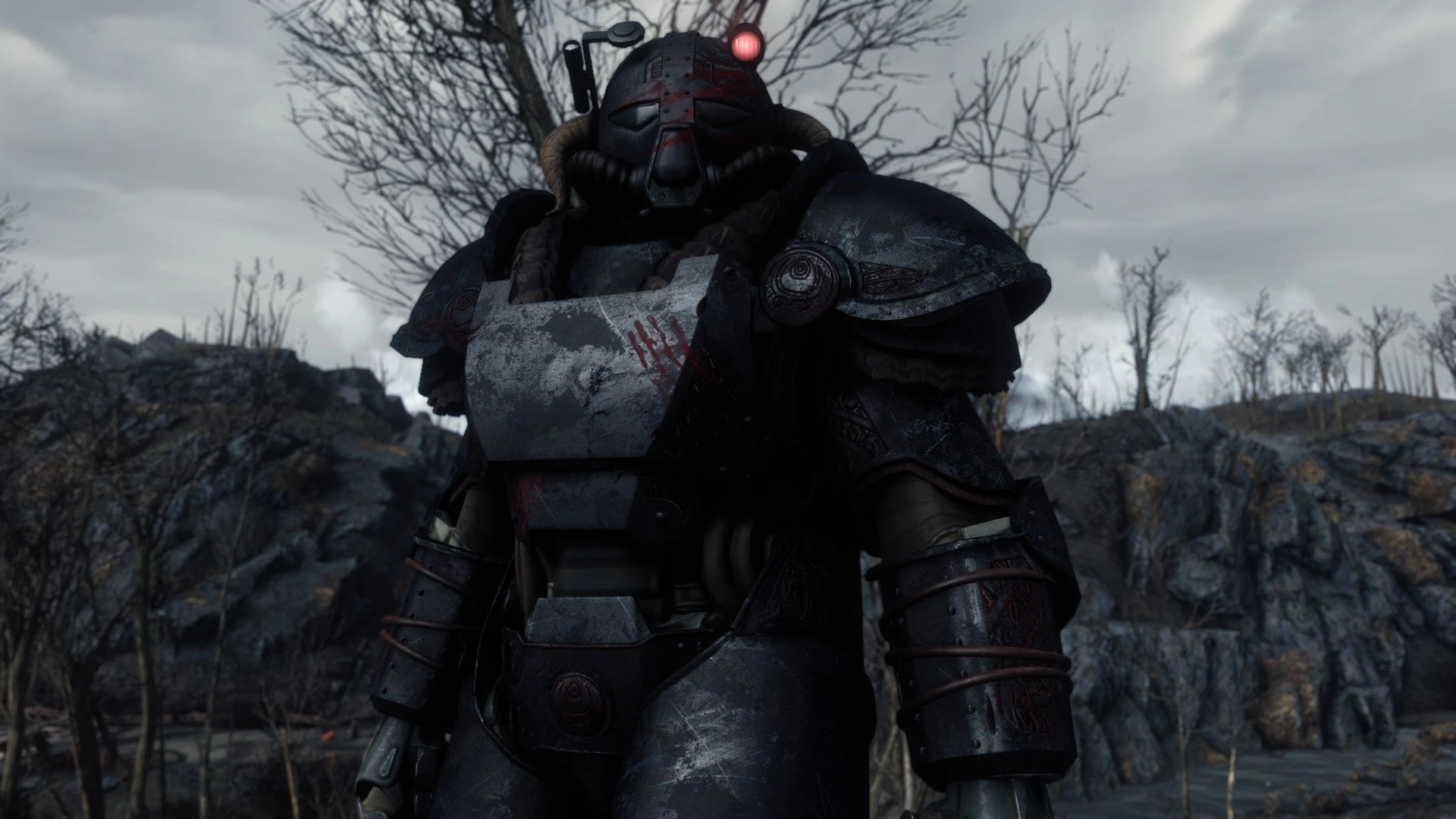
Skyrim was a grand melding of all the Bethesda RPGs it succeeded. Strands of DNA from Morrowind, Oblivion and Fallout 3 were evident in its world, its systems and its questing. It was vast, intricate and inviting - exploring its woods, towns and tundra evoked a sense of childhood adventure, a kind of Narnia with beards. It set many paths before you, but left your character's background and motivation undefined to the point of absurdity, opening as it does with you condemned to execution - for which no charges are read. As one guard mentions, you're not even on the list, and you're given no opportunity to find out why before a dragon attack facilitates your daring escape.
Fallout 4 doesn't grant your digital self any such anonymity. No matter how many sliders you fiddle with on the character creation screen, its player character is always a parent, a veteran of war (or the wife of one), on a quest to find their son after witnessing his kidnapping and the brutal murder of a spouse. It's a motivation which you can perhaps forgive for its triteness, but not for its incongruence with most of the paths available to the protagonist later on. While we gain a sense of clarity as to who we are supposed to be, Fallout 4 robs us of the ability to define it for ourselves, and asks us to choose between actions that support it, or betray it. It's one thing to be a tourist in a fantasy land, it's quite another to be a tourist in someone else's trauma.
This problem is perpetuated throughout the rest of Fallout 4, while its underlying causes are often, paradoxically, inverted. Skyrim's many towns and villages are fixed. There is no system for building bespoke structures on blank foundations as there is in Fallout 4, whose signature feature comes at an indirect cost - its pre-baked settlements are, with the exception of Diamond City (a large shanty town welded into a baseball stadium), uncompelling and insubstantial. The most interesting settlements are the ones which we craft ourselves. In allowing us to define the land but not the character through which we explore it, Fallout 4 casts us oddly as a divine tinkerer, rather than a visiting stranger.
Fallout 4 gave us unprecedented customisation over our weapons and armour. Its crafting system allows for many permutations of its stock equipment, while Skyrim's standardised inventory makes a poor showing in comparison. However, the application of that equipment is much more nuanced. Skyrim has a tendency to funnel players toward specific styles. Dozens of character builds are possible, from warriors to blacksmiths, from stealthy nightblades to apocalyptic battlemages. Its levelling system encourages specialisation, favouring more rationing of options as you level up. The further you go into one skill tree, the less able you are to flesh out the others.
In comparison, Fallout 4 is far less restricted. Its only real specialisations are to be good at hitting stuff, or good at shooting stuff - and its combat system, VATS, is heavily geared toward the latter. The supporting skills available - lockpicking and hacking, for example - serve overlapping functions in the world, and Bethesda went out of its way to have most obstacles accommodate most solutions. Solutions which, purely through the application of time, were available to everyone.
Do you really know the rules?
Both games have branching questlines that force crucial narrative decisions on the player, but Skyrim's story never tests its verisimilitude. It asks us to choose between bending the knee to an empire or founding a new nation, deciding who lives and dies in the process. But it never commits the sin of presuming where our loyalties lie. When Fallout 4 asks you to make similar calls, it does so while jeopardising our character's established goals, forcing us to act in accordance with them, or to take a course which runs counter to everything we know about our avatar.
Fallout 4 gave us an abundance of options, but it perhaps gave us freedom in all the wrong places, and kicks off by encumbering us with the emotional baggage of a family, a home, a clear and interactive memory of our character's origins. It's a tired old charge to levy after years of a genre convergence trend that has had 'RPG elements' seeping into every release, but these things undermine it as a role-playing game. There is only one role in Fallout 4; an aggrieved parent, who's good at shooting guns and opening doors.

Skyrim only places you in its world, and has its denizens make appeals to your conscience, your understanding, your politics - or, whatever you've decided they're going to be while you're there.
Ultimately, what Skyrim had that Fallout 4 lost, was you.
Sign in
Connect with Facebook
New in town?
Forgotten your details?